

The Pioneer of Fair-faced Load-bearing Reinforced Concrete MiC Primary School
The primary school in Fo Tan pioneers an innovative fair-faced load-bearing reinforced concrete (RC) MiC design, setting a new benchmark for future MiC schools built in the same way. By combining advanced grout tube and tie bar connections, this novel structural approach significantly reduces wet trades onsite while enhancing overall construction efficiency.
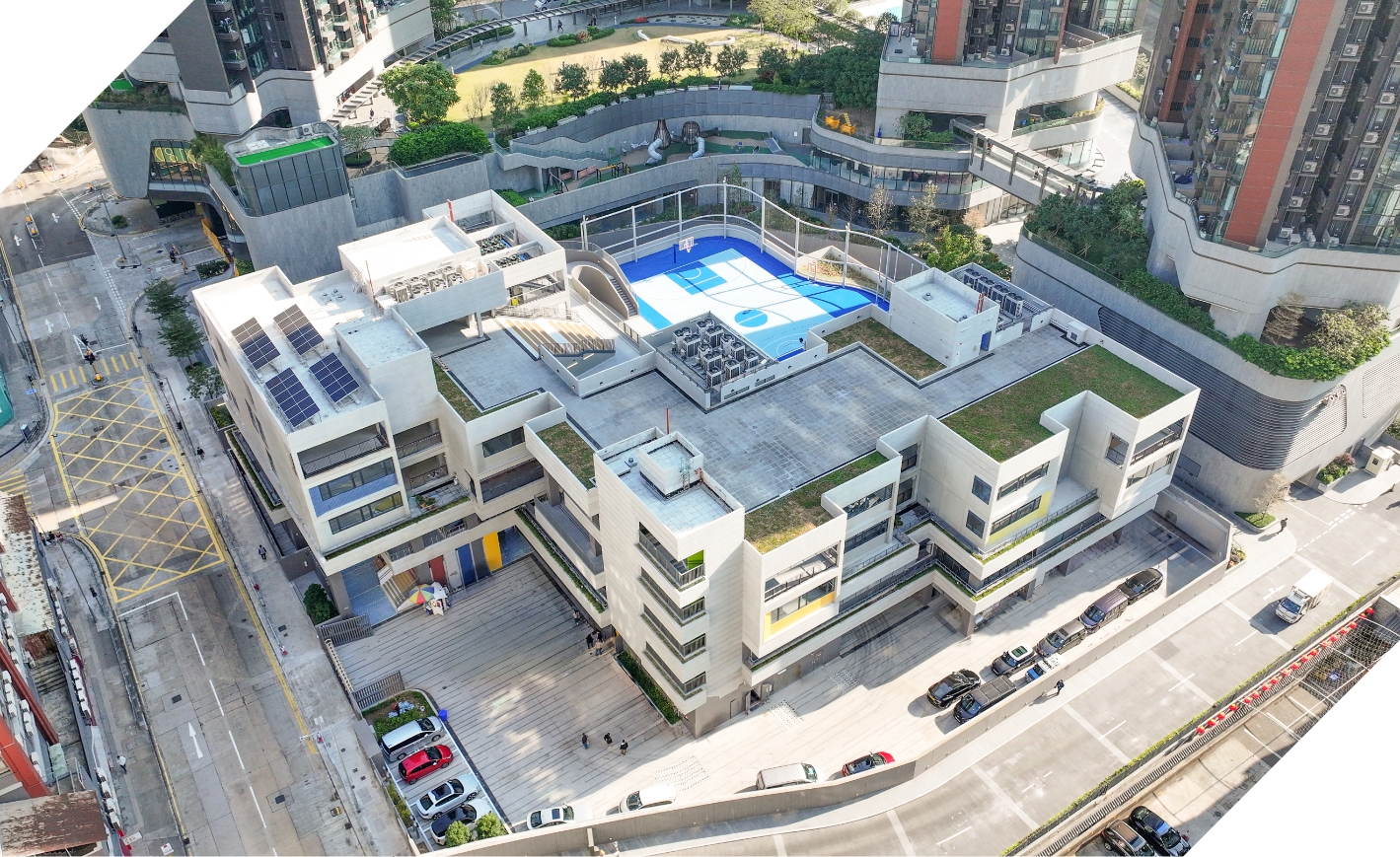
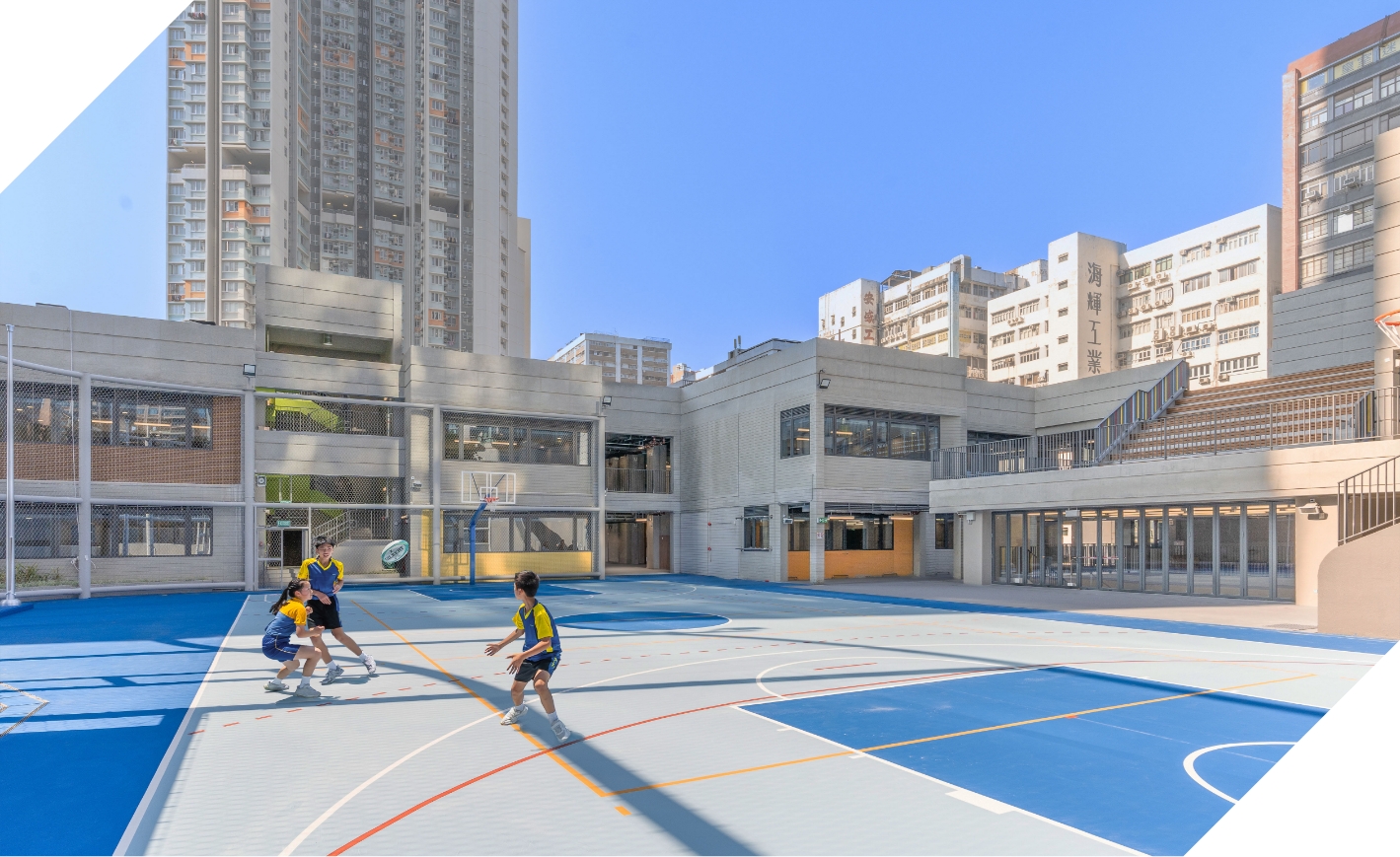
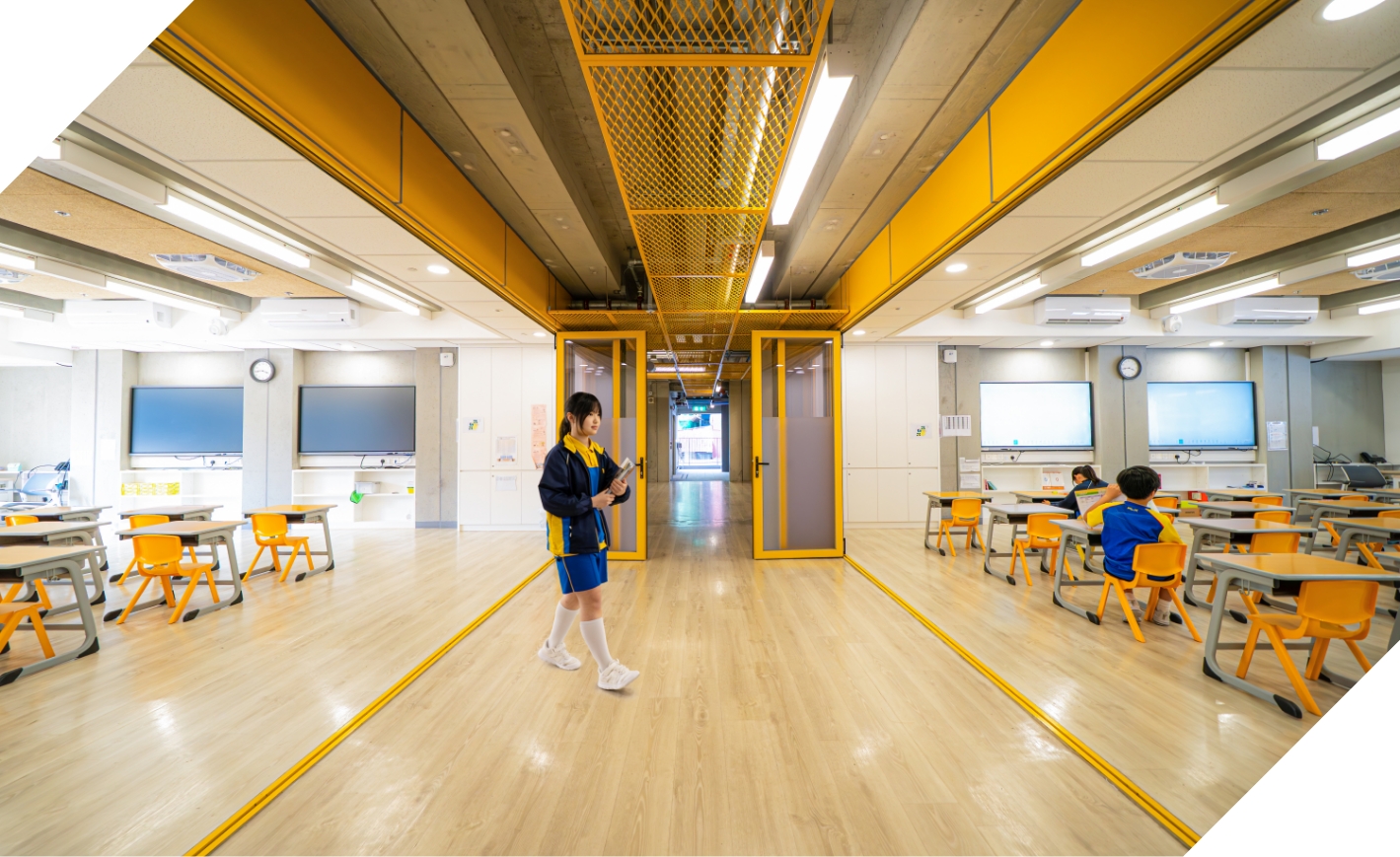
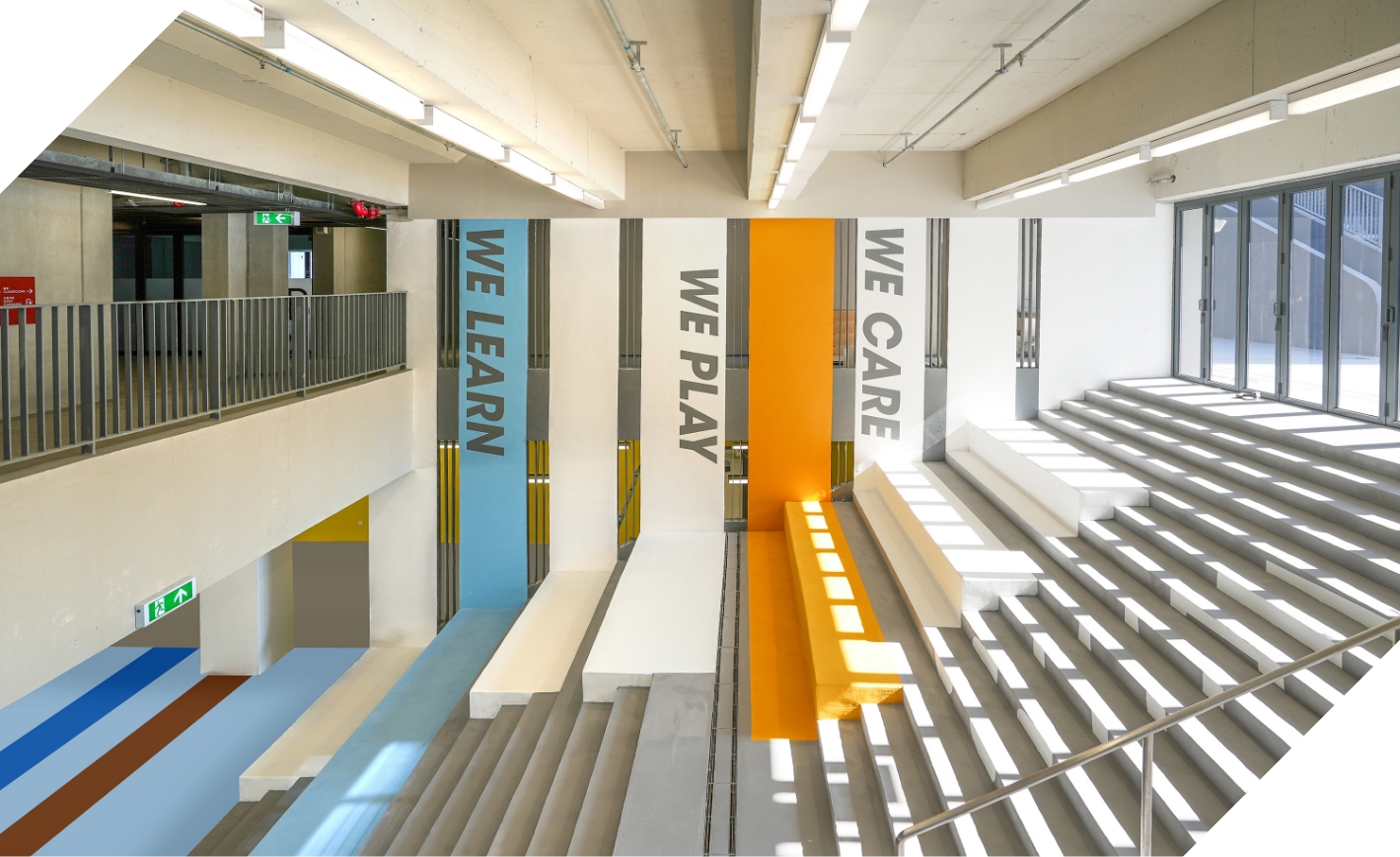
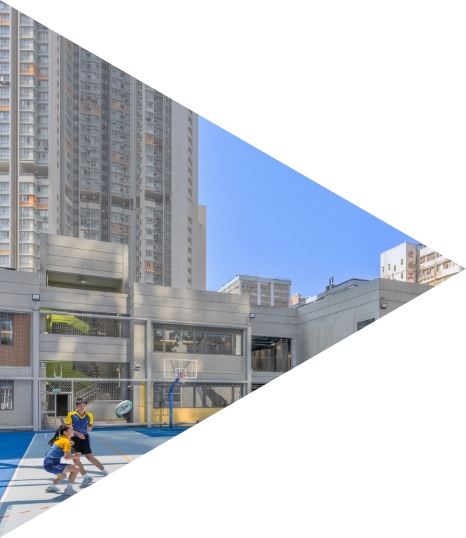
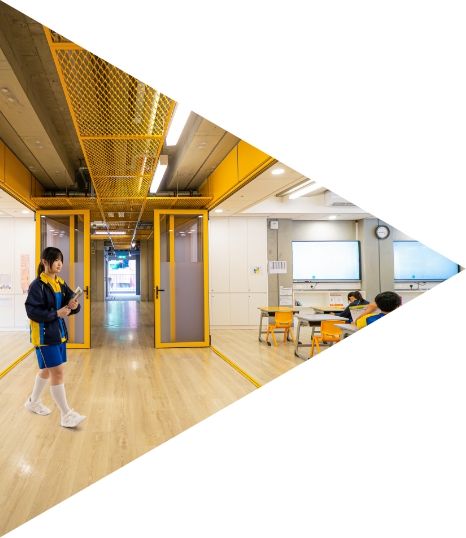
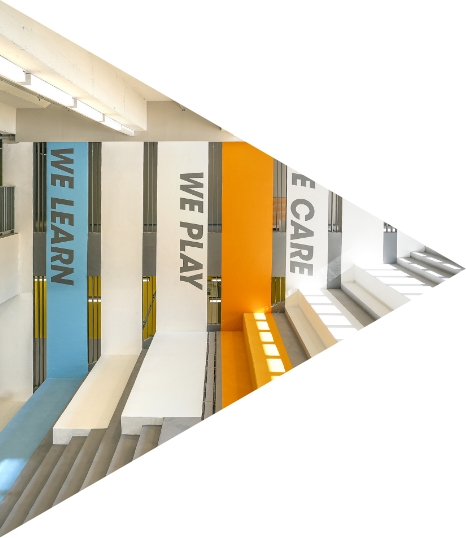
Departing from traditional layouts, the school adopts a low-density spatial scheme, integrating learning facilities within a compact yet flexible footprint. Its unique design features 3 teaching cluster blocks encircling the sports podium deck on the 2nd floor, linked by semi-open corridors to foster connectivity. Each cluster includes 4 classrooms with DfMA-enabled aluminium folding partitions, offering adaptable spaces for diverse teaching methods. The use of fair-faced concrete finishes for both exterior facades and interior walls lowers embodied carbon while showcasing the material’s natural aesthetic and MiC’s superior concrete quality control.
To ensure seamless offsite manufacturing and onsite assembly, BIM played a pivotal role in facilitating architectural, mechanical, electrical and plumbing (MEP) coordination through BIM CAVE, precision rebar setting, and 4D simulation for MiC module installation. DfMA principles were also applied to M&E equipment, including air-handing units, pump sets and electrical distribution boards, minimising waste and optimising energy efficiency.
Key Features
The low-density spatial design integrates learning facilities, fostering a cohesive environment for study and activities while minimising visual and ventilation impacts on neighbouring buildings.

LEARN MORE

Recognised for its groundbreaking innovation and engineering excellence, the project won the HKIE Structural Excellence Award 2025 – Commendation Merit and obtained Green Building Award 2025 - Finalist.

The primary school consists of 24 classrooms, 4 small group teaching rooms, 6 special rooms (including a music room, a visual arts room, a general studies room, a multi-purpose room, a computer assisted learning room and a language room), a library, a guidance activity room, 2 interview rooms, a staff room, a staff common room, a conference room, an assembly hall, a multi-purpose area, a student activity centre and other ancillary facilities.

