Converting Tsun Yip Street Playground as Kwun Tong Industrial Culture Park
Description
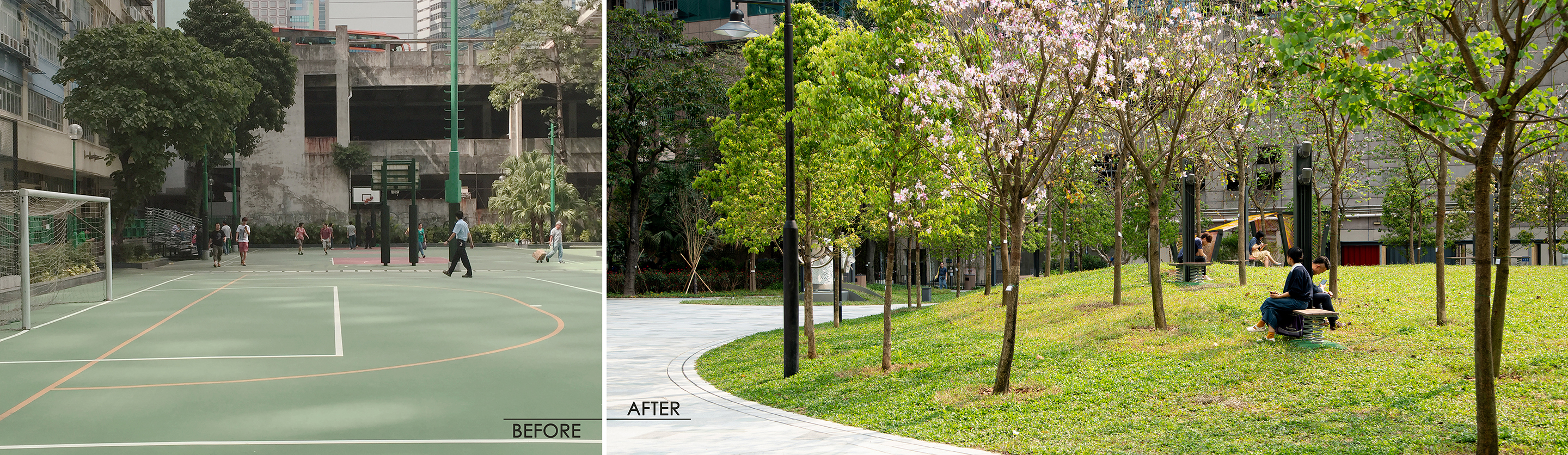
Locating at the centre of the former industrial area, the Tsun Yip Street Playground was built in 1973 serving mainly factory workers in the manufacturing sector at the time. With the history of being one of the major manufacturing centres in Hong Kong, Kwun Tong was occupied by large factory blocks and godowns. But due to recent economic development, the area began to transform into a business district. The existing playground, which was mainly hard-paved ball courts, can no longer meet the needs of present-day business workers. This tiny open space becomes the only breathing lung and urban connecting space for the area. There are public aspirations for more greenery and leisure space that can provide flexibility for holding different activities.
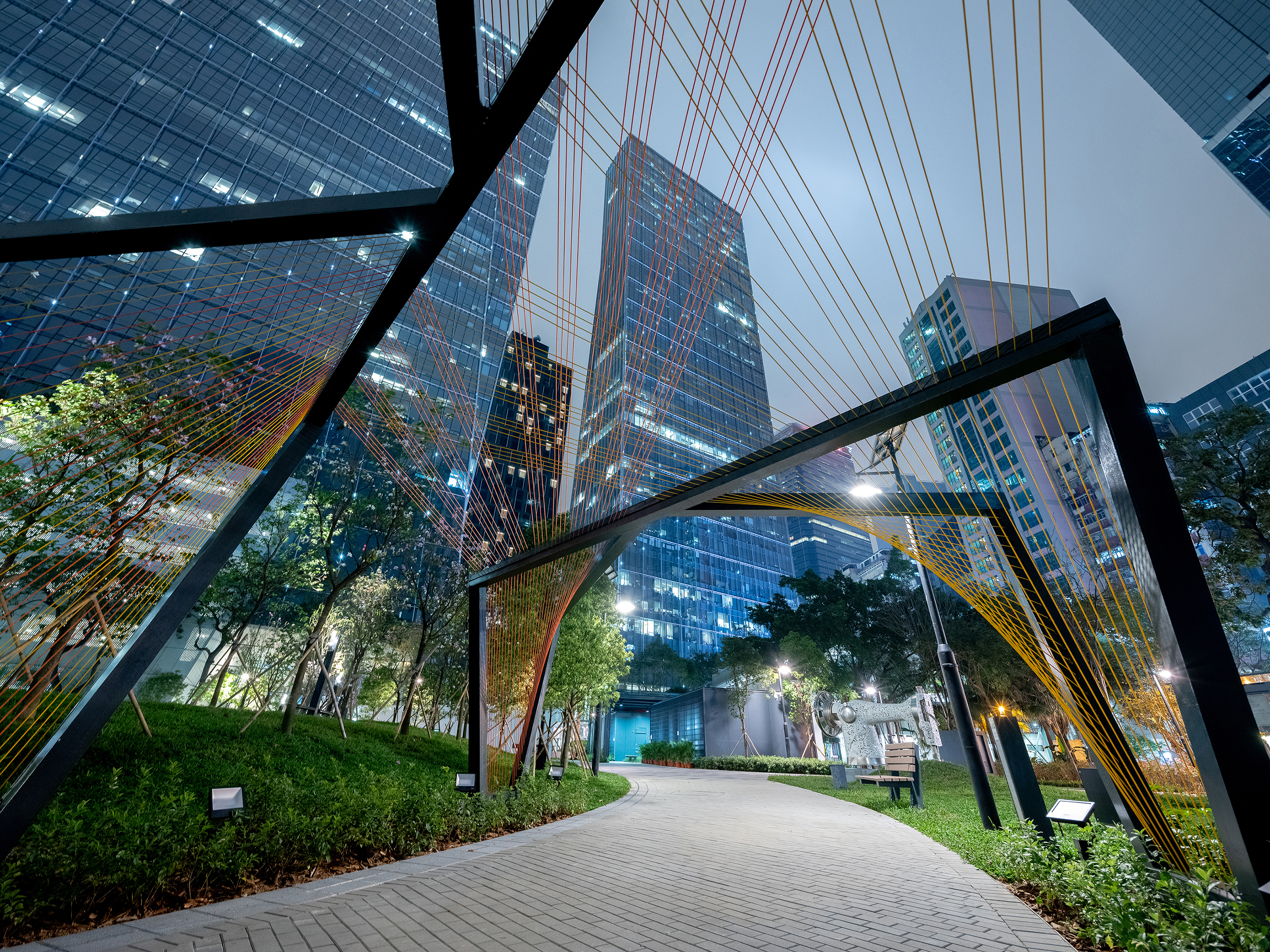
The space develops from a concept that relates to the integration of urban context, densely built neighbours and organic natural forms of landscaping in the park. Like a secret garden for the local community, the park is a gem with greeneries hidden within high blocks of commercial giants. In the midst of the park, a gradually sloped central lawn is created, visitors are free to run and play on this open ground. Around the lawn, we installed seven award-winning artworks by different artist groups to celebrate the glorious industrial past of the manufacturing industries back to 1950s. This creates an engaging and welcoming gesture to the public through layering of spaces, both open and closed, soft and hard, artistic and casual, old and new.
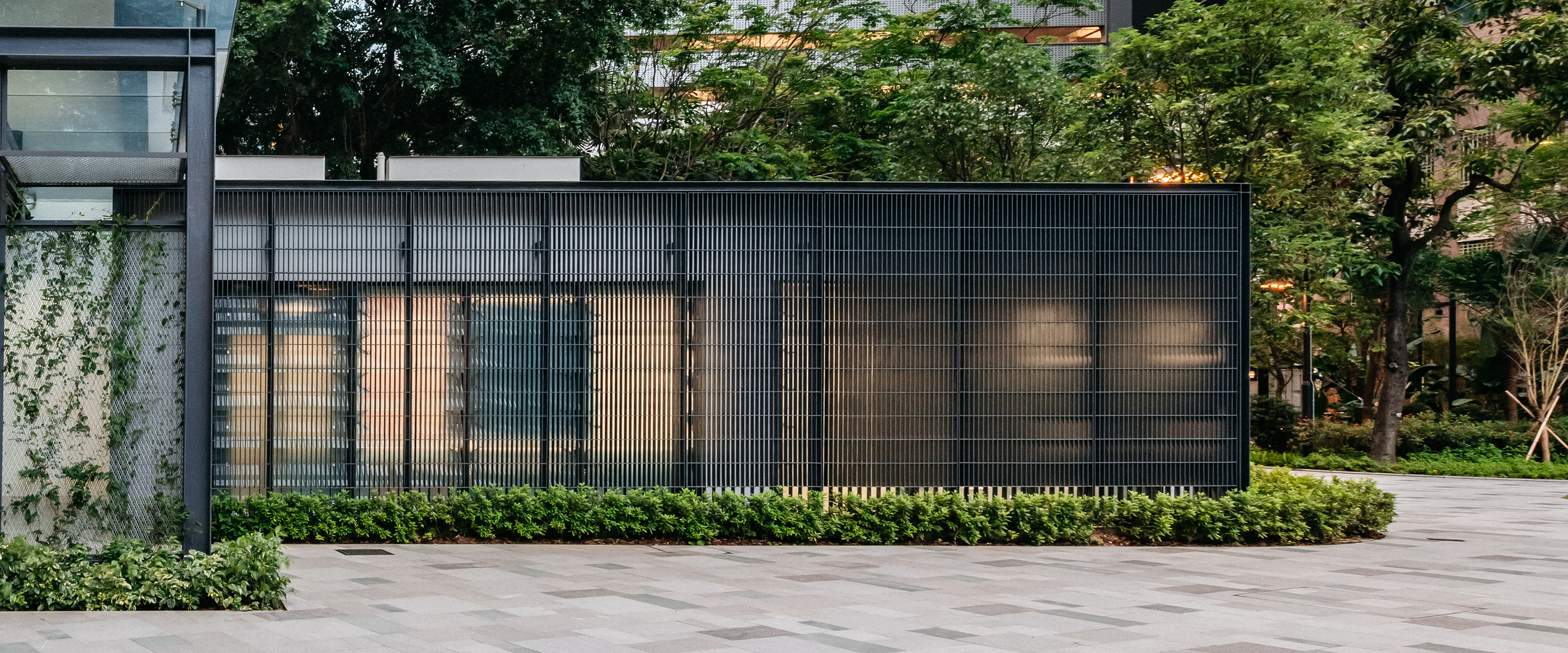
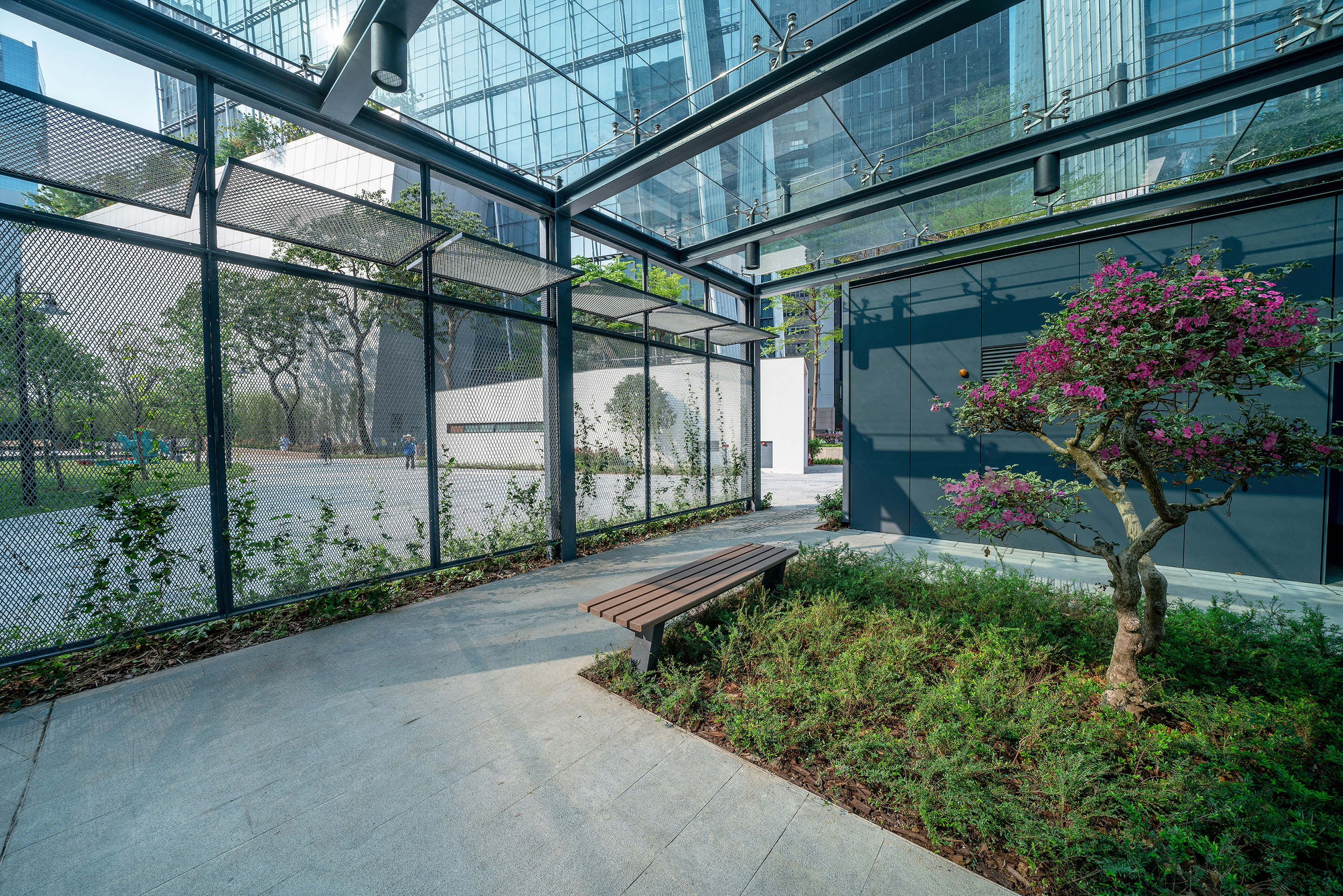
This urban hub is located at the intersection of existing road and back lane running South-to-North and East-to-West. It connects the pedestrian flows at all sides of the site. It naturally acts as a focal point and a 24-hour urban connector in the area. We set the toilet block and park office at the sides to provide screening of the outside urban activities. Moreover, the design of layering of spaces is created by using metal screens and translucent glass louvres to delineate between the toilets and the garden to enhance the transitional experience between the semi-open and semi-enclosed. The continuous organic form of lawn contrasting the hard edges of the surrounding tall buildings that breaks from the rigidity of the dense urban environment. With the mediation of indoor and outdoor rooms among the toilet, park office and the sloping green, one can perceive different spatial quality within the “secret garden”.
Seven sets of public artworks representing seven specific industries, namely printing, clothing and garments, textile, toys, plastics, electronics and timepieces. In this open-air gallery, the artworks are designed to interact with the park users in different creative ways. The rebirth of the park showcases how industrial culture elements can be integrated into urban design to revitalize public space. It accommodates the “The Spirit of Creation" exhibits and demonstrate creative ways of adaptive reuse of containers and other industrial elements.








_EN_85x50.png "Legislative Control of Cannabidiol (CBD)")